
1.Why Traditional Budgeting Fails (and Why This Works)
Most people start a budget with high energy. They track every single ₹5 spent on tea. By day 10, they are exhausted and quit.
I’ve been there. I used to think I needed to be a math genius to save money. Then I found the 50/30/20 Rule. It’s not about restricting yourself; it’s about allocating your freedom. Think of it as a “Financial GPS.” You don’t need to know every turn; you just need to know the destination.
2. What Exactly is the 50/30/20 Rule? (The Pizza Analogy)
Imagine your monthly take-home salary is a large pizza. Instead of eating it randomly, you slice it into three specific portions:
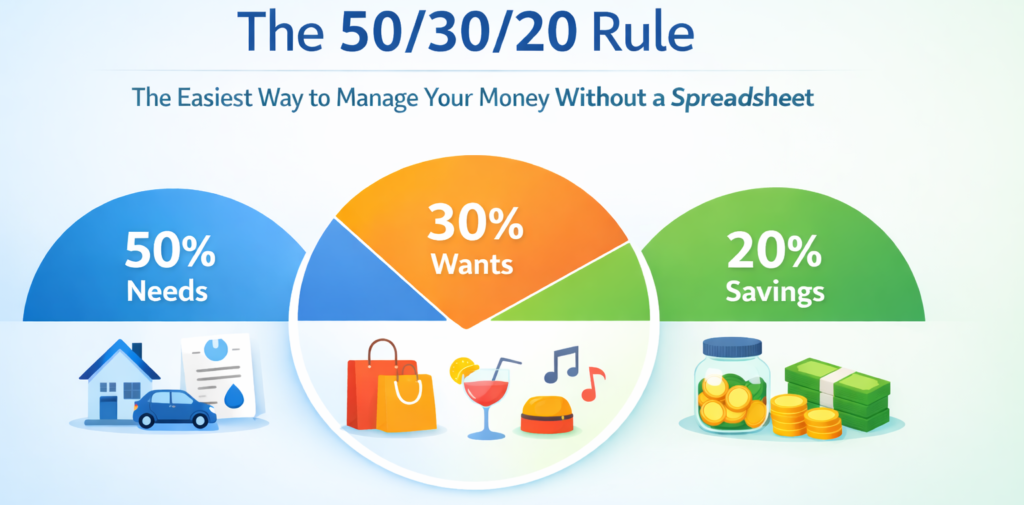
- 50% (The Crust – Needs): The foundation that holds everything together.
- 30% (The Toppings – Wants): The stuff that makes life delicious.
- 20% (The Box – Savings/Debt): The part that protects the pizza and ensures you have more tomorrow.
3. Detailed Breakdown: Section by Section
Category 1: The 50% for “Needs” (The Essentials)
These are the bills you must pay to survive. If you don’t pay these, your life changes drastically.
- Rent or Home Loan (EMI)
- Groceries & Basic Food
- Electricity, Water, and Internet
- Insurance (Life and Health)
- Minimum Debt Payments
Infobuddy Tip: In India, our “Needs” can sometimes cross 50% because of high rent in cities like Mumbai or Bangalore. If your Needs are at 60%, don’t panic. Take 10% away from your “Wants,” NOT your “Savings.”
Category 2: The 30% for “Wants” (The Lifestyle)
This is where most people feel guilty, but the 50/30/20 rule gives you permission to spend here.
- Dining out & Ordering from Zomato/Swiggy
- Netflix, Prime, and Spotify Subscriptions
- Shopping for clothes (not uniforms)
- Hobby classes or Gym memberships
- Travel and Vacations
The Reality Check: A “Want” is something you could live without if things got tough. You don’t need that ₹250 coffee, but it makes your morning better. That’s a 30% item.
Category 3: The 20% for “Financial Goals” (The Wealth Builder)
This is the most important slice. This money doesn’t belong to your present self; it belongs to your future self.
- Building an Emergency Fund (as discussed in our Roadmap to Financial Freedom)
- Mutual Fund SIPs
- Extra Debt Repayment
- Retirement Funds (EPF/PPF)
4. Interactive Comparison: The “Messy” Budget vs. The 50/30/20 Budget
| Feature | The “Messy” Way (Common) | The 50/30/20 Way (InfoBuddy) |
| Spending Priority | Spend first, save what’s left | Save first (20%), then spend |
| Mental Stress | Constant guilt when buying shoes | No guilt, as long as it’s in the 30% |
| Emergency Prep | Zero or very low | Built-in via the 20% |
| Wealth Growth | Slow and accidental | Automatic and consistent |
5. How to Start if You Are Living Paycheck to Paycheck
If you are starting from zero, the 20% savings might look impossible. The “Step-Up” Strategy: Start with 60/35/5. Save just 5% this month. Next month, cut one “Want” (like one dinner out) and move to 60/30/10. Within 6 months, your goal is to hit that 20% mark.
6. Common Myths About the 50/30/20 Rule
Myth 1: It’s only for high earners. Fact: It’s actually more important for low earners to avoid debt traps.
Myth 2: It doesn’t work with Indian families. Fact: We have a natural culture of saving, but we often forget the “Wants” section, leading to “frugality burnout.” This rule balances it.
7. FAQs: Things My Readers Ask Me
Disclaimer: The information on this page is for educational purposes only and does not constitute financial, investment, or tax advice. Always do your own research and consult a SEBI-registered financial advisor before making any investment or financial decisions. InfoBuddy does not guarantee the accuracy or completeness of this information.
Financial Disclaimer
The information provided on The 50/30/20 Rule: The Easiest Way to Manage Your Money Without a Spreadsheet by InfoBuddy is for educational and informational purposes only and should not be considered financial, investment, or legal advice.
We aim to simplify complex financial concepts, but we do not guarantee the accuracy, completeness, or reliability of any information presented. Financial decisions involve risk, and outcomes may vary based on individual circumstances, market conditions, and other factors.
Before making any financial or investment decisions, you should consult with a qualified financial advisor or a SEBI-registered investment advisor.
InfoBuddy and its authors, including Sonu Kumar Pal and contributors such as Anshuman Kumar, are not liable for any losses, damages, or financial decisions made based on the information provided on this website.